
Alabaster Lampshade Factory – Custom Spanish Alabaster Lighting Solutions factory SJMG

China alabaster lampshade manufacturer SanJia/mg factory.
13/09/2026أغطية مصابيح الألباستر الإسباني، صُنع في الصين:
13/09/2026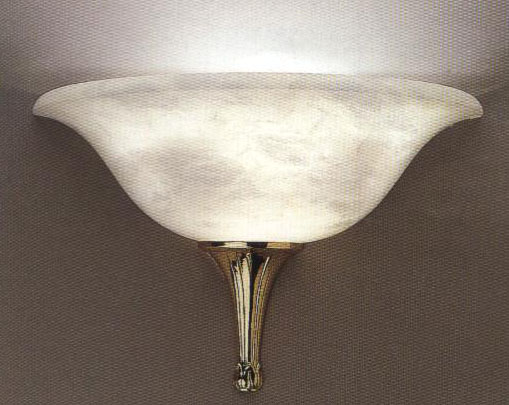
We are a China-based factory specialized in lampshades. Our main products are glass lampshades and alabaster lampshades. Since 2025, demand for our alabaster lampshades has grown by more than 20% year on year, and the number of customer inquiries is rising sharply. Therefore, we would like to reintroduce our alabaster lampshade manufacturing business and capabilities so new customers can gain a deeper understanding of our products and factory.
Contact us for alabaster lampshades from China:
Email: 3509124168@QQ.COM
Company Background
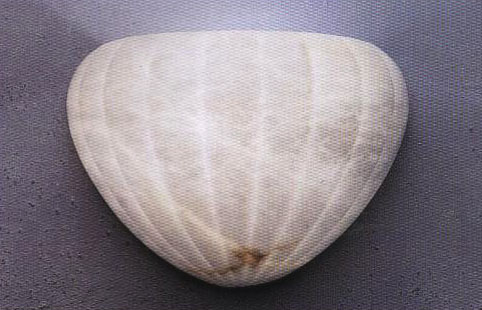
In fact, since 2007 we have been producing alabaster lampshades for long-standing customers. We have accumulated rich industry experience and resources, and most of our work is custom, non-standard lampshade production. This has shaped our refined manufacturing craftsmanship for alabaster lampshades.
We operate three lampshade factories in Zhongshan and Jiangmen, China. One of them provides lampshade supporting services for nearby lighting factories. We are recognized as one of the three finest alabaster lampshade manufacturers in the Chinese lighting industry.
Production Capacity & Lead Time
We can produce 5,000 regular alabaster stone lamp shades per month. We have more than 20 skilled, veteran alabaster craftsmen from Spain, plus 5 cutting machines and 15 polishing machines. We also employ 12 general grinding workers and 26 other pieces of equipment. Our designers and engineers can prepare drawings for customer confirmation within three working days. Our quality is among the most reliable in the industry, and our dimensions consistently receive praise from customers.
Our typical delivery time is around 20 days. OEM/ODM lampshade production capability is one of our strongest competitive advantages.
For Designers & Architects
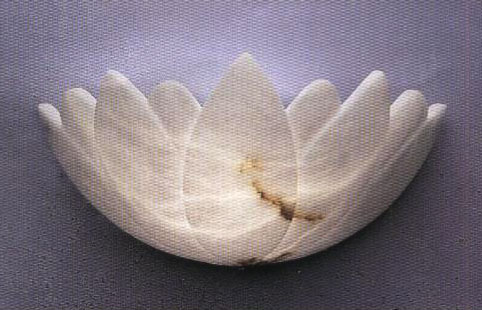
Designers and architects only need to send us drawings; we can usually produce samples for confirmation within 10 days. Our speed and quality often surprise designers and architect clients.
Payment Terms
Because most of our alabaster lampshades are customized, our payment terms usually require a deposit of no less than 50%, with the balance due before shipment. If you are not genuinely interested in working with us, please do not waste time contacting us.
Why Our Spanish Alabaster Lampshades Stand Out
Our Spanish alabaster (also known as Spanish snowflake stone or Aragon white) lampshade factory is distinguished by genuine material with stable quarry sources, excellent light-transmission workmanship, tight machining accuracy, light/heat safety, and reliable long-term mass-production delivery.
1. Genuine Material with Traceable, Stable Quarry Sources
Our Spanish alabaster is gypsum alabaster (CaSO₄·2H₂O) with a Mohs hardness of only 1.5–2 and a density of about 2.3 g/cm³. It is one of the most translucent commercial stone categories in the world. Most of our raw materials come from the Ebro Valley and the Jiloca/Calatayud basins in Aragon, Spain, including mines near Fuentes de Ebro, Gelsa, La Puebla de Híjar, and Azaila, as well as some translucent-stone mines in Afghanistan. Processing workshops are mainly concentrated in our Chinese lampshade factories.
Real Spanish Alabaster vs. Imitation Resin/Faux Alabaster
| Test Method | Real Alabaster | Resin / Faux Alabaster |
|---|---|---|
| Weight | Density ~2.3; same size looks light but feels heavy | Density ~1.2; obviously lighter |
| Touch temperature | Feels cold at first and stays cool after holding | Returns to body temperature within seconds |
| Cut / edge inspection | Fine crystals visible; veins run through the full thickness, inside and outside | Patterns float only on the surface; cross-section is uniform and may show mold lines or bubbles |
| Scratch test | Fingernail can leave a light scratch; blade scrapes out powder | Scrapes off flakes; striking with a hard object leaves no mark |
Tip on visual inspection: Real stone scatters light between crystals: thin areas glow brighter, vein areas look deeper, and texture appears at different depths. Resin gives a uniform layer of light with patterns “stuck” on the surface. Also, if several lampshades of the same model are lined up with identical patterns, they are molded goods—real stone can never repeat exactly.
Lighting tip: Color temperatures above 4000K cool white can make stone look like a flat gray mass, similar to resin. Always evaluate alabaster under a 2700K light source; this reveals the superior quality and texture of our Spanish alabaster lampshades.
2. Light-Transmission Workmanship & Machining Accuracy – The Key to Long-Term Partnership
Genuine stone is only the starting line. From the same block, the price difference between an ordinary alabaster lampshade and a high-quality one can be threefold.
Wall Thickness & Uniformity (First Technical Core)
Alabaster absorbs a lot of light—about one-third to one-half of the luminous flux is absorbed and re-radiated as surface glow. Therefore the lampshade must be turned thin. High-quality work usually keeps wall thickness around 4–10 mm and pursues uniformity. Too thick and the shade looks dull; too thin and strength drops and light spots appear.
Chipped Edges, Cracks, Sand Holes & Glue Filling
Alabaster is brittle. From quarrying to finishing, the raw-material yield is often only 20–30%. Yield directly determines whether a quotation is reasonable. Pay special attention to edges, drilled holes, and the bottom of the lampshade—these are the easiest places to chip and the main areas where glue filling is hidden.
Surface Finish & Feel
Real alabaster has a fine “matte” feel after polishing, not a mirror-like smoothness, and the natural stone veins remain visible.
Splicing & Vein Matching
For large lampshades built from multiple pieces, check whether seams are tight, light-tight, and aligned. High-end factories perform vein matching so that a set of lamps in one project has coordinated grain direction. This is the detail designers care about most and the dividing line of factory capability. For cutting accuracy, CNC can hold within 0.5 mm, while hand cutting often exceeds 2 mm.
Forming Methods: Hollowed Solid Block vs. Sheet Splicing
We can handle both processing methods and do them more finely than other factories. Our cost advantage can save about 30% compared with competitors.
3. Light/Heat Safety + Mass-Production Consistency & Delivery – Removing Customer Worries
Light Source & Heat
We now basically use only LED. For enclosed lampshades, actual power per shade should be kept within 10W; avoid halogen cup lamps and high-wattage incandescent bulbs. This is not just about saving electricity—heat bakes dust and organic films onto the stone, creating the so-called “alabaster yellowing.” In fact it is dirt, not a color change of the stone; gypsum itself is geologically stable and will not yellow for millions of years. Color temperature 2700K (maximum 3000K) is recommended.
Structural Safety
Alabaster is heavy. Hanging fittings, metal structures (solid brass vs. zinc-alloy plating), and safety factors must be checked against our drawings. Our engineers provide structural safety drawings to guide customers.
Care Advice
Avoid water, moisture, and direct sunlight. Alabaster is slightly soluble in water; clean only with a slightly damp cloth and dry immediately. Long-term sun exposure can cause yellowing.
Batch Consistency & Quarry Stability
We source alabaster raw materials not only from Spain but also from Afghanistan and other regions. Multiple stable long-term partners ensure we can consistently supply high-quality alabaster lampshades to our customers.
Packaging & Breakage Rate
This is one of our factory’s highest priorities. Brittle stone requires custom foam molds plus wooden crates and drop testing. Responsibility for transport damage caused by packaging belongs to us. We guarantee 100% safe packaging for alabaster transport; if any safety damage occurs during shipping due to packaging, our factory bears 100% responsibility.
Three Core Advantages of Spanish Alabaster for Lampshades
Because of these three core advantages, we believe being an alabaster lampshade manufacturer is a long-term business, and we prefer to spend more time growing this business together with our valued customers.
Advantage 1 | Volumetric Scattered Translucency: Light Does Not “Pass Through” the Stone – It Takes a Journey Inside
Spanish alabaster is microcrystalline gypsum (CaSO₄·2H₂O) made up of extremely fine gypsum crystals. When light enters, it scatters repeatedly at crystal interfaces (subsurface scattering) and finally “seeps out” across the entire wall thickness. This gives three results that glass and resin cannot match:
- No hot spots, no glare: Even at high output you cannot see the bulb outline; the whole lampshade becomes a uniform, low-brightness luminous surface.
- Depth: Dense veins absorb more light and thin areas transmit more, so texture layers appear at different depths. You see a “glowing volume,” not just an illuminated surface—this is the key to telling real from fake.
- Warm filter built in: Stone absorbs cool wavelengths and transmits warm wavelengths, adding an amber/cream base that the same-color-temperature LED alone cannot achieve.
Quantitative reference: Thickness is everything. Transmittance is roughly 30–60% and decreases approximately exponentially with thickness. A 1 mm difference at 10 mm is far more visible than the same 1 mm difference at 25 mm. Therefore wall-thickness tolerance (±0.3–0.5 mm) directly determines whether the finished product has dark bands.
Advantage 2 | Every Piece Is Unique: Natural Veins Are Both Aesthetic Value and Natural Anti-Counterfeiting
Iron oxide creates golden-brown veins, manganese gives gray-black tones, and quartz inclusions add subtle sparkle. Veins are the record of millions of years of mineral-fluid flow: never repeated, never regular, running through the full thickness. This brings two benefits:
- Design: Every lampshade is a one-off. Multiple lamps in one project can be vein-matched, the most valuable handcrafted signature of high-end projects.
- Procurement: Repeated patterns mean molded goods. If lamps of the same model are lined up with identical veins, they are resin or composite stone.
Touch: Real stone feels cool and fine like frosted glass, with a density of about 2.3 g/cm³ and a clearly hefty feel. Resin returns to body temperature within seconds.
Advantage 3 | Soft Enough to Work + Inorganic Stability: Easy to Machine, Yet Built to Last
With a Mohs hardness of only 1.5–2 (marble 3–4, granite 6–7), alabaster can be carved with woodworking tools, and uniform thin walls of 4–6 mm can be reliably turned. This physical softness is precisely why it is a top lampshade material; it also allows CNC to hold tolerances within 0.5 mm.
The mineral itself does not yellow. Gypsum is geologically stable, and its color formed over millions of years. “Alabaster yellowing” is almost always caused by incandescent/halogen lamps baking dust and organic films onto the surface, or by early LED phosphor degradation—not by the stone changing color.
Gypsum itself is non-combustible and releases no toxic smoke. Natural stone has no radioactivity, and waste material can be recycled into gypsum powder, making it a low-carbon material.
Research on Alabaster Translucency & Lighting
Spanish alabaster lighting and translucency have been studied and published by many experts and scholars, proving the great value of Spanish alabaster in lighting, especially decorative lighting.
① Optical transmission properties of Pentelic and Paros marble
R. Weigand, P. A. García Pastor, J. Campos Acosta, J. Storch de Gracia (CSIC Institute of Optics, Spain) | Applied Optics 54: B251–B255, 2015 | DOI: 10.1364/AO.54.00B251
To verify whether the Temple of Olympian Zeus could have used semi-translucent marble roof tiles for daylighting, calibrated spectrophotometers measured spectral absolute transmittance at different thicknesses, and illuminance meters measured total transmittance. Conclusion: both marbles transmit light; Pentelic marble had higher transmittance than Paros in some visible bands, possibly a reason for ancient roof-stone replacement.
② Experimental investigation into the effects of composition and microstructure on the tensile properties and failure characteristics of different gypsum rocks
Hongfa Ma et al. (China University of Mining & Technology, Beijing, et al.) | Scientific Reports 11: 14517, 2021 | DOI: 10.1038/s41598-021-93947-6 | PMC8282642, open access
Using XRF, XRD, SEM, and Brazilian splitting tests, the study compared composition, microstructure, and tensile failure characteristics of fibrous gypsum, transparent gypsum, alabaster, and ordinary gypsum rock. Key data: alabaster CaSO₄·2H₂O content 72.78%, tensile strength only 1.79 MPa (transparent gypsum 2.22, fibrous gypsum 3.22, ordinary gypsum 4.35 MPa).
③ Designing backlighting to enhance the experience of porcelain tiles
J. Kop | Master’s thesis, Industrial Design Engineering, Delft University of Technology (TU Delft), 2014 | Supervisors S. C. Pont, M. Hajian | repository.tudelft.nl
A backlight module designed for semi-translucent bone-china tiles. The research systematically compared five light-source types; LED and LED strips were optimal overall in lifespan, volume, cost, and design flexibility. Target customer groups (high-end residences, hotels, restaurants) were determined through questionnaires and competitor pricing. The final design was selected using a requirements list plus Harris Profile, resulting in a 150×150×18 mm backlight panel.
Our Commitment
Therefore, we are willing to invest more and put our hearts into making the best alabaster lampshades, “glowing and warming” the industry, producing better premium lampshades for our customers, and contributing to human aesthetics.
Our factory welcomes all customers and professionals who share the ambition and origin to make great lampshades to visit and guide us.
Alabaster lamp shade manufacturer from China MG 云石灯罩制造商 collection
https://www.kdocs.cn/l/ct1HDaf6AqYs
Get in touch:
Email: 3509124168@QQ.COM
 English
 French
 Italian
 Portuguese
 Russian
 Spanish